
Baby It’s Cold Outside!

January 30th, 2012

Layer up and don't forget the helmets!by Vincent Kame, Jr. PT, MS, ATC

Well, okay. Not as cold as the Northeast but for those of us in Arizona, it can feel cold in the balmy months we call “winter”. One of the benefits of living in Arizona is that we do have warmer winters yet, in a short drive or plane flight, we can also have access to skiing and snowboarding. 

Typically, Arizonan’s are not used to the cold weather. So off we go to romp in the snow and we can end up completely unprepared to handle the physical and physiological demands cold weather sports bring.   Our kids may be use to the running sports of summer and fall, but sports that take place in the winter offer new variables for our bodies. Variables that, left unchecked, can at the very least cause an unpleasant down-hill experience and, at the most, result in injury.

Having a great winter sport experience is actually pretty simple if you apply these 3 basic practices:

Drink – up

Often overlooked in chilly weather, hydration is a key to winter wellness. During the warm season, we are diligent about getting enough water. We carry water bottles around and stress frequent drinks. This is easy when the heat is telling us that we need to drink, not so when it is cold. It is very easy to become dehydrated when the temperatures drop.  We do not think we are sweating because of the cold but there is still evaporation that occurs.  Also, we lose water with increased urination. This is an effect caused by the blood being routed to the core to preserve warmth instead of the periphery to dissipate the heat.  We also lose water as we breathe. When you see your breath in cold weather, that is the water vapor freezing as it leaves your body.  Before heading out to the cold weather cities, make sure that you are keeping up with the hydration strategies you did when the weather was hot.  Drink at least 20 ounces of water before activity and hydrate at regular intervals. You can keep a camel-back or water bottle inside your jacket (to keep it from freezing). If you find you are working really hard, take time to take in an electrolyte-type of sports drink as well.

Wrap-up

What you wear is as important for fun in winter sports as anything. There is simply no replacement for good, wicking and warming layers, appropriate socks, gloves and head gear.  When layering, think of a base layer that will wick moisture from your skin so the sweat doesn’t cause you to get chilled. Polypropylene, silk, polyester, Thermax, Thinsulate, and wool are all good choices.  Avoid cotton because it traps moisture, so it stays wet and draws heat from you. Base layers come in various weights (lightweight, midweight and heavyweight). Select a weight based upon the outside temperature and your activity level. The lighter weight is better at wicking, the heavyweight has more insulation. Mid layers provide warmth and insulation. This layer should be a bit more lose yet still fitted to aid in the wicking.  Your outer layer should be able to block wind and wetness yet allow for moisture to escape.

Finally, wear a hat, mittens or gloves, socks and shoes or boots that match your activity and weather conditions. To cool yourself if you overheat, you can often just remove your hat or gloves. Keep in mind that wind blocking fabric is also important for hats and gloves.

Train-up

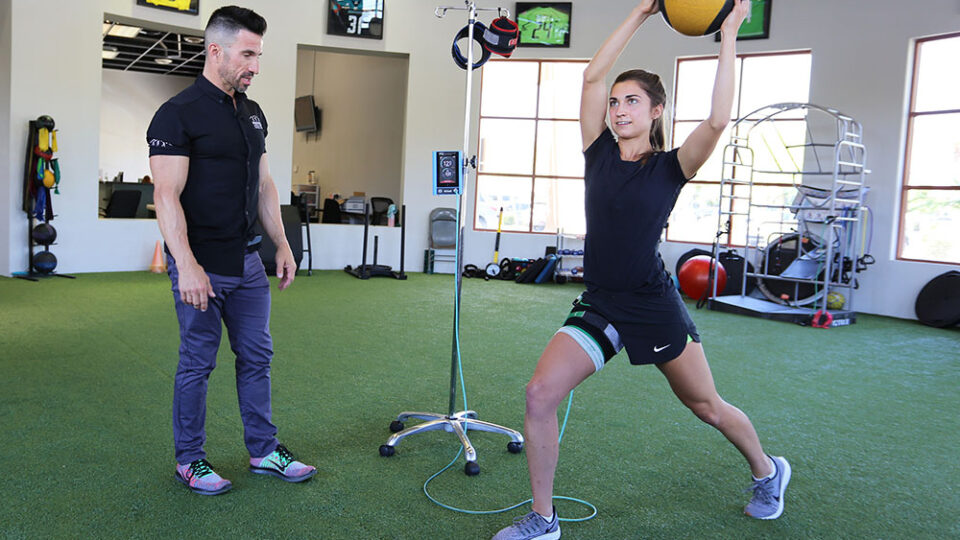
Skiing and snowboarding require different skills than flat land sports. If you and your kids are recreational two-plank or knuckle-draggers,  just a little alternative training can go a long way to shred-it down the mountain.  Balance, core and leg strength need to be strong enough to maintain the proper positions down the runs. Abdominal, back, upper thigh and buttocks muscles must be trained so that they have the endurance to complete turns, control speed and stop effectively. In addition to this, most sports involve a stable foot being planted on a flat, non slippery surface. With skiing and snow boarding this is different. The surface is inclined and definitely slippery. Sport conditioning specialists use devices like exercise balls, BOSU platforms, and slide boards to simulate the demands placed on the body during skiing and boarding.   We may only participate in these sports a few times each year, but the consequences of not being prepared can mean injury that keeps you from favorite activities year round.  

One of the best things about living in Arizona is the fact that we have access to all types of out door sports. We can be playing soccer one day and hitting the slopes the next.  We just need to keep in mind that, in order to enjoy this lifestyle, we need to be diligent about how we prepare bodies.

Strength Training in Young Athletes

December 28th, 2011

by Vincent Kame Jr., MS, PT, ATC

Over the past few years, how many times in the fitness industry have you found things that you once thought to be ‘the standard’ changed, upgraded or completely dispelled? The way we warm up is different, the way we execute many exercises is different, and who really wears leg warmers and head bands anymore?

The same is true when it comes to strength training for young athletes. Parents have told their kids for years “Don’t lift heavy weights. It will stunt your growth.”  To a great extent in the athletic training world that has been the rule of thumb as well.  Lifting heavy weights as children develop can cause stress on the areas of the bone that grow, the growth plate, and affect the ability of the bone to grow normally. So many parents completely abstain from letting their children participate in any type of strength training exercises.  

However, children as young as 7 can do strengthening exercises without stunting growth plates and it can be hugely beneficial for them in the long run.

This can’t be understated: Lifting heavy weights and using poor techniques can damage the growth plate. Kids should not be doing heavy weights with low repetition numbers. Instead, professionals who deal with training children should use body weight exercises, light weights and resistance band exercises. This allows for the muscle to be stressed to a point that it will get stronger without the adverse effect on the growth plate.

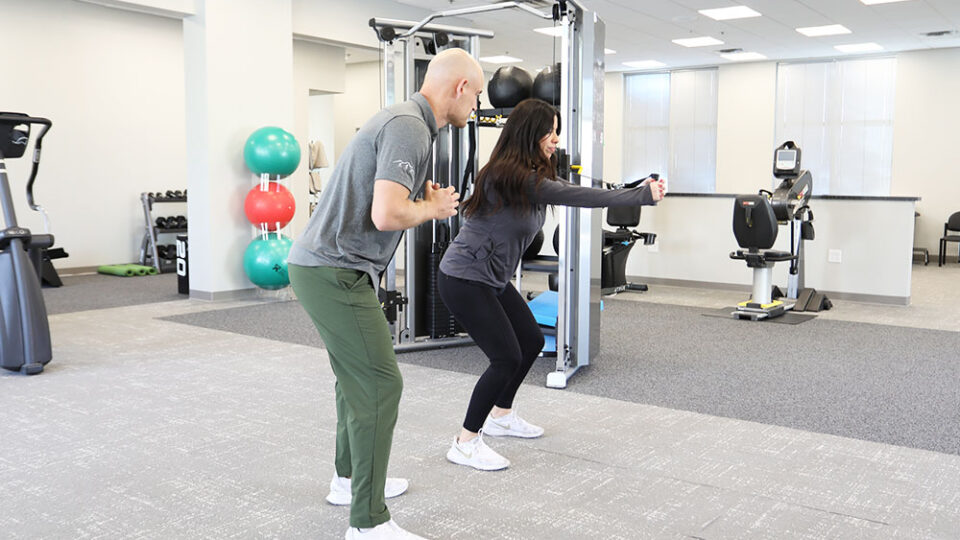
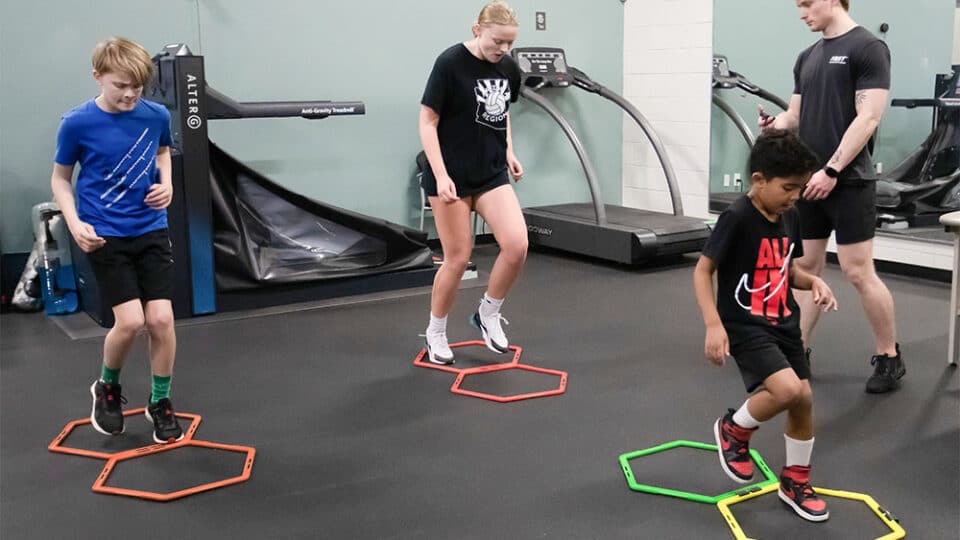
Strength training in youth should also include more sport-specific movement patterns that mimic what the child will be doing in their sport.  This not only minimizes any negative response of the growth plate, but also helps build muscle, bone and tendon in ways that it would adapt and be able to tolerate stresses the child might endure as they progress in their chosen activity.  In addition, learning proper motor skill patterns with exercises like lunging, squatting, push-ups, and landing techniques, will help kids develop good form when handling weight load correctly later in life. 

Another myth regarding strength training and youth is that, because the hormones that are responsible for building muscle are not yet circulating in high enough levels, there would be no real strength gains. Recently, studies have shown this not to be true. There have been significant strength gains in children who have undergone appropriate strength training. There have not been big gains in muscle size because of the low levels of hormones but overall strength has increased.  It needs to be stressed here that the hormones will occur naturally in most children. No artificial means of trying to boost these levels should be done. If there is a deficiency your physician will address it.

The benefits of proper strength training for youth can include:

  • Improved strength
  • Protection against injury
  • Improved coordination and motor skills
  • Increased speed
  • Changes in body composition
  • Enhanced self esteem

So now you know the long held standard regarding weights and kids is not, necessarily, spot-on.  It’s important to account for the method of training and how it is implemented. Keeping this in mind, when you consider strength training for your child (or yourself), seek the advice and supervision of an experienced athletic trainer or certified strength and conditioning specialist.

Concussions in Kids – It’s Not Just a Football Injury

November 2nd, 2011

by Vince Kame, Jr., PT, MS, ATC

As parents we all want our children to be physically active, to pick a sport they enjoy and that also helps them build good skill and fitness. We also want to protect them. We make sure they are careful crossing the street, climbing on the play set, wearing a helmet when riding the bike. We want to protect those precious little noggins. 

When we hear of someone suffering from a concussion, we automatically think of Football. Although, this sport does have the highest incidence of concussion rates in sports, it does not have the monopoly on athletic related brain injuries.  Concussions can occur in any sport and need to be recognized and cared for properly.  Surprisingly to most, soccer (especially girls’ soccer) has one of the highest occurrences of concussions other than football and female players have twice the rate to boys’ soccer. 

Some claim that heading of the ball is dangerous and this is what is causing the head injuries in soccer. When we look at how these occur however, we find the majority of the concussions are due to contact with other players, head to head causes the most.  Only 24% of concussions occur when making contact with the ball and almost none when intentionally heading the ball.  Improper technique and unexpected contact are what causes the ball contact concussions.  Some have advocated eliminating heading the ball for younger players while others advocate better coaching to make sure the players are heading properly. Wearing headgear while playing soccer is another controversial subject and the results are still too new and too few to say if they will make an impact in decreasing the concussion incidence.

What we do know is that concussion will occur on the soccer field. We need to be able to recognize when this does happen, know how to handle the situation and when it is safe to return to play. This is difficult in a sport that has few stoppages. The coaches, officials and medical personnel on site need to be aware when a collision incident involving the head occurs and watch for signs of a concussion.  The Center for Disease Control and Prevention has designed a program “Heads Up: Concussions in Youth Sports” to help coaches, parents and athletes recognize and deal with the symptoms of concussions.  This can be obtained at no charge via their website.

Do you know the signs and symptoms?

One of the mysteries for most people dealing with concussions is being able to recognize when a concussion, however mild, has occurred and when to seek medical attention. Concussions are “graded” on a scale of 1-3. An important thing to remember is, no matter what the grade or whether the injury happens during a game or outside on your backyard play-set, the child should be examined by a physician.   Here is a simple way to assess the severity of a possible concussion and what to look for:

Grade 1:  This is characterized by some confusion, temporary memory loss, slight nausea, NO loss of consciousness.  The symptoms resolve in 15 minutes or less.  On the field the player may be out of position or slower to react than they normally would. They may not remember assignments or plays. They may complain of a headache.

Grade 2:  This is very similar symptoms to Grade 1 but more severe and lasting longer than 15 minutes yet still NO loss of consciousness.  They may be more irritable than normal.  Play will look similar to Grade 1 but they may get very frustrated and irritated with their play or any other aspects of their environment.

Grade 3:  Loss of consciousness for any length of time is a grade 3 concussion.  It may be difficult to recognize if it is brief and before a coach or medical personnel can get there.  However, if loss of consciousness is even suspected, the child needs to receive medical attention immediately.

When is it safe to play?

The other difficult aspect in dealing with head injuries is when to return to play.  The rules of return are: The athlete needs to be symptom free for 24 hours, at each activity below, before they can move to the next level of activity.  Once the athlete is symptom free for 24 hours at rest they can perform:

  1. Light Aerobic exercises: jogging, stationary bike etc.
  2. Sport Specific Drills/Exercises
  3. Non-contact training - then on to…                  
  4. Full-contact training                     
  5. Return to Games

Concussions and head trauma can be the longest lasting injuries in sports causing problems well past the playing days. With proper recognition and intervention we can minimize the impact of these injures and allow our youth to enjoy all sports safely.

Sports Drinks vs Energy Drinks: The good, the bad, and the ugly!

October 6th, 2011

Erik Pence, MS, CSCS, PES

Energy drinks and sports drinks are typically found in the same section of the supermarkets or drugstores, which lead many to believe the two beverages are interchangeable. With expensive marketing campaigns, catchy slogans, and exotic names such as Red Bull, AMP, Monster, RockStar (Energy drinks), and Powerade, Gatorade, All Sport and Accelerade (Sports drinks), both types of drinks are typically marketed towards athletes and non-athletes of all ages. However, these two types of beverages are quite different. They both have their advantages AND disadvantages. Also, not all the research behind them is conclusive or complete. The purpose of this article is to inform you about these two types of beverages so you can make a decision on the proper use, if at all, for you and your children. 

What are these drinks supposed to do?

Energy drinks, as the name suggests, are designed to act as a stimulant and give you a quick burst of energy. Sports drinks, on the other hand, are designed to increase endurance, replace electrolyte loss or prevent dehydration when exercising for long periods of time. Sports drinks are particularly useful when engaging in a high-intensity physical activity for longer than an hour.

Many energy and sport drink manufacturers claim that, in addition to providing a boost in energy, their drinks promote wellness through medicinal properties (they usually contain vitamins and/or ingredients like ginseng, guarana, and taurine).

What is in these drinks?

Energy drinks contain caffeine (or caffeine precursors) and sugar as primary ingredients. They also may contain several supplemental ingredients, including B vitamins, amino acids, taurine, carnitine or herbal extracts to name a few. The Food and Drug Administration (FDA), while it regulates caffeine content in soft drinks, does not regulate caffeine contained in energy drinks. In the United States, it is not required that manufacturers list the ingredients of energy drinks; therefore, it is difficult for consumers to appreciate how much caffeine they ingest with energy drinks. Studies have suggested that people with high blood pressure or heart disease should avoid energy drinks. The American Heart Association issued an alert in November 2007 concerning dangers energy drinks pose to those with known cardiovascular issues.

Sports drinks usually consist of carbohydrates, sodium and potassium. Some may include protein or vitamins. and minerals as well. Even as this article is being written, there is a shift in the sports drink industry to redesign sports drinks. Protein is being added to many newer sports drinks. There is a growing body of evidence suggesting that the addition of protein to sports drinks may enhance recovery and performance.

As for the benefits of consuming sports drinks, each brand will claim its own branded benefits, but in general, most of the more established sports drinks will have a concentration of carbohydrates that range between 5 to 7%. However, this does NOT mean that sports drinks are the better choice for athletes and fitness-minded individuals. Why?

Sugar

While both energy drinks and sports drinks contain a significant number of calories that are derived from sugar, energy drinks typically contain more sugar than sports drinks. While the specific amounts vary depending on the type of beverage and the brand, most energy drinks contain 25 to 35 g of sugar in every 8 oz. serving, while sports drinks contain 14 to 17 of carbohydrates from sugar. The amount of carbohydrates and sugar in both energy and sports drinks can cause individuals to gain weight, especially if consumed too frequently. High levels of sugar result in an accelerated sugar rush, quickly followed by a crash, which is the last thing any athlete or fitness-focused individual wants.  In addition, there are also the potential long-term ramifications of excess sugar, which include diabetes, weight gain and high blood pressure.

Dangers of combining Energy Drinks with alcohol

While it is important to provide accurate information on energy drinks and caffeine as it relates to human physiology; of greater concern to should be the trend of combining energy drinks with alcohol. If alcohol is mixed with caffeinated energy drinks, the individual is subjected to a double diuretic effect, since alcohol, like caffeine, has diuretic properties. Thus, they further compromise hydration, and consequently, performance.  Alcohol is a depressant and energy drinks are stimulants. It is a dangerous combination to consume them both at the same time. Along with all the effects of alcohol in the human body, such as dehydration, fatigue, feeling of impairment, vomiting, and respiratory depression are observed as side effects of energy drinks mixed with alcohol. Moreover, energy drinks’ capacity to mask intoxication encourages increased alcohol consumption, which in turn increases the likelihood that individuals will make the kind of choices that have negative, if not disastrous, results.

What’s the bottom line?

No studies have been done on the effects of energy drinks on children. Because energy drinks are not regulated, it’s hard to know what, exactly, is in them or to fully understand the negative effects some of the herbal ingredients will have on your child. Obviously, the high caffeine and sugar levels alone are cause for concern and should be avoided for teenagers on down.

With sports drinks, pediatricians recommend minimal consumption. They can be beneficial for children involved in higher-intensity sports lasting longer than an hour like running, biking, soccer, hockey or basketball. So for active kids, a sport drink here and there is fine. But for a sedentary child, you may want to side-line the sports drink in favor of water.

 Most pediatricians agree that the bottom line for children and young teens: Eat a balanced diet consisting of lean protein, fresh vegetables, grains and fruit. Drink water and get adequate rest. That way kids will have the energy they need to play – naturally.  

 References

  • MayoClinic.com: Artificial Sweeteners; Energy Drinks OK for athletes?; Edward R. Laskowski, August 2009
  • J Int Soc Sports Nutr; Thermogenic effect from nutritionally enriched coffee consumption; Hoffman JR, Kang J, Ratamess NA, and Faigenbaum AD. 3: 35-41, 2006
  • J Int Soc Sports Nutr; The effercts of JavaFit Energy Extreme coffee ingerstion on resting energy expenditure and hemodynamic responses. Taylor L, Wilburn C, Harvey T, Wismann J, and Willoughby D. 2: 2, 2005.
  • J Strength Cond Res; Effect of a pre-exercise “high-energy” supplement drink on the acute hormonal response to resistance exercise; Hoffman JR, Ratamess NA, Ross R, Shanklin M, Kang J, and Faigenbaum AD; 22: 874-882, 2008
  • Amino Acids; the effect of Red Bull energy drink on human performance and mood; Alford C, Cox H, and Wescott R; 21: 139-150, 2000
  • Eur J Appl Physiol; The effect of caffeine ingestion on one repetition maximum muscular strength; Astorino TA, Rohmann RL, and Firth K; 102: 127-132, 2007
  • J Int Soc Sports Nutr; Efficacy and safety of a popular thermogenic drink after 28 days of ingestion; RobertsMD, Dalbo VJ, Hassel SE, Stout JR, and Kerksick CM; 5: 19, 2008
  • University of New Mexico; Sports & Energy Drinks: Answers for Fitness Professionals; Jerry J. Mayo, Ph.D., R.D. and Len Kravitz, Ph.D.

Dynamic vs Static Stretching – You’ve got to know when to hold it!

August 18th, 2011

By Amy Novotny, PT, DPT

One good thing about Exercise Science is; we’ve come a long way baby. Gone are the days of practice with everyone commencing by lining up for toe touches and quad stretches: holding your ankle up and behind you in an unnaturally, uncomfortable position!

Understanding the proper type of stretching before and after activity is essential to enhancing performance and avoiding injury.  When young athletes engage in physical activity, they are often encouraged by coaches and parents to stretch prior to activity.  The goal is to prepare muscles for sports, to enhance performance and decrease risk of injury, including sprains and strains.  In the past, advice regarding stretching has referred to static (or passive) stretching prior to activity. That is, stretching held for 15-60 seconds in a stationary position to improve the flexibility of one muscle group at a time.  However, recent research confirms the benefits of dynamic stretching prior to physical activity in both children and adults.  Dynamic stretching uses functional, activity-specific motions with constant movement to warm-up.  Static stretching then becomes important in the cool down after activity. 

A thorough warm-up period is designed to prepare the body for physical activity by:

  • Increasing core body temperature
  • Stimulating blood flow to the arms and legs
  • Enhancing coordinated movement
  • Improving range of motion
  • Developing body awareness of joint position sense and movement
  • Using movement to expand muscle and tendon flexibility

These benefits of a good warm-up, which were once associated with static stretching prior to activity, are now attributed to dynamic stretching activities.  In fact, evidence now suggests that static stretching prior to physical activity and sports may be detrimental to performance involving vertical jumps, shorts sprints, muscle endurance, maximum muscle contraction, balance and reaction time (McMillian 2006).  Studies have also shown that static stretching can result in less force and power production not only in adults, but also in children, especially in jumping and sprinting performance (Faigenbaum 2006).  Because the goal of the warm up period is to prepare the body for specific functional movements related to a sport, dynamic stretching appears to provide that service without being harmful.

While holding a “runners lunge” prior to practice or a game may be a thing of the past, static stretching is still very important for the cool-down phase and should not be skipped. During the cool-down, athletes are led through a program to allow the body temperature to return to normal levels and prepare the body for the healing process.  During vigorous activity, muscle fibers tear at microscopic levels and need to undergo a reparation process that is essential for building new fibers, and as a result, increasing strength.  As muscles cool down, they tend to heal in the position in which they are left.  This highlights the importance of passive stretching after physical activity: low-load long duration static stretching allows the muscles to stay in a lengthened position as the muscle cools down.  This provides a greater length through which the muscle can contract to generate force during the next time activity is initiated.  Thus, static stretching serves a greater benefit to young athletes post-exercise. 

When designing dynamic and passive stretching programs, here are some common considerations:

Dynamic stretching programs (Mann 1999):

  • Move continuously, typically in laps for 10-15 minutes overall
  • Vary the program according to the level of the athlete
  • Start slow and progress to quicker and more advanced movements
  • Avoid movements too intense that fatigue the muscles
  • Incorporate the whole body and imitate movements used in specific sports

Passive stretching programs:

  • Stay in one position per muscle group
  • Hold the stretch for 20-30 seconds
  • Repeat the stretch 2-3 times per muscle group
  • Address all muscle groups used in the specific sport

Sources:

Avery D Faigenbaum, James E McFarland, Jeff A Schwerdtman, Nicholas A Ratamess, Jie Kang, and Jay R Hoffman.  Dynamic Warm-Up Protocols, With and Without a Weighted Vest, and Fitness Performance in High School Female Athletes. J Athl Train. 2006 Oct-Dec; 41(4): 357–363.

Danny J. McMillian, Josef H. Moore, Brian S. Hatler and Dean C. Tayler. Dynamic vs. Static-Stretching Warm Up: The Effect On Power and Agility Performance. Journal of Strength and Conditioning Research, 2006, 20(3), 492–499.

 Douglas P. Mann and Margaret T. Jones, CSCS. Guidelines to the Implementation of a Dynamic Stretching Program. Journal of Strength & Conditioning Research. 1999. Volume 21, Number 6, pages 53–55.

Hot Weather Hydration for Young Athletes

July 20th, 2011

Is Your Child Getting Enough Water This Summer?  Dustin Buck, PT, ATC


It should go without saying that living in Arizona makes it difficult for anyone to stay hydrated in the summer. But for young athletes it is particularly difficult.


First, obviously, they are out exercising in extreme temperatures (even in the morning it can be over 98 degrees). Second, their bodies don’t tolerate excessive temperatures the way adults do because they haven’t fully developed cooling mechanisms like sweating so kids can overheat more quickly than adults.  Finally, they will tend to just keep playing and not think about continually drinking to stay hydrated. Kids being kids, (even when they are thirsty) they will just keep-on going not recognizing the first signs of dehydration.


So, aside from just keeping your young athlete from over-heating, sports performance diminishes with even the slightest bit of dehydration. The American College of Sports Medicine (ACSM) reports that even a 2% decrease in total body water results in a decrease in aerobic exercise performance. Although this may not apply as readily to sprinting sports such as basketball, football, or baseball, the ACSM also reports that this same 2% decrease may decrease mental function, a fact that would apply to all athletics.


Even more critical than sports performance is that, left unchecked, dehydration can rapidly accelerate to heat exhaustion and stroke.


In order to be properly hydrated during practice and at game time, it is important that your child drink enough fluids beforehand.  It is recommended that as early as 4 hours before vigorous exercise, athletes should take-in at least 1-2 cups of fluids. The urine color should then be monitored 2 hours later.  If the urine color is still darker than a light yellow, another ½ to 1 cup of beverage should be ingested.  Drinks with proper amounts of sodium (e.g., Gatorade) or pre-game meals containing sodium can aid in fluid retention and stimulate the athlete to drink enough to be fully hydrated.  During the game, how much to ingest will depend on many variables including the sport, weather conditions, and size of the athlete.  Therefore, the ACSM recommends that athletes monitor weight change during practice and games.


Now, we all know that weighing a kid before, during and after practices and games isn’t always practical. So a good rule of thumb to keep water, and electrolyte, levels up during exercise is to drink fluids every 10 to 15 minutes during activity. If it is particularly hot make sure to have the athlete take in water as well an electrolyte replacement drink. Parents, it is a good idea to teach your kids to drink at regular intervals.


After exercise, it is essential to replenish the body’s fluid and nutrient levels. Under normal circumstances, normal meals and drinks will restore proper hydration levels. However, if the athlete has to rehydrate quickly (e.g., play the second of a doubleheader on 2 hours rest), a faster remedy will need to be used. To accomplish this, weight loss should be measured and about 3 cups of fluid should be ingested for every pound lost. Light amounts of foods and drinks containing sodium will also be helpful to promote fluid retention.

 Signs of dehydration to watch for in your child are:

  • Fatigue
  • Nausea
  • Headaches
  • Cramping
  • Difficulty in coordination
  • Excessive thirst


Hydration is as important for optimal performance as practice and good equipment. Carrying out this vital task properly ensures that your athlete has the proper nutrients during key times in the big games and, more importantly, that they learn good habits to function healthfully and avoid injury for the rest of their life.


Sources:

American College of Sports Medicine. Exercise and Fluid Replacement. Med Sci Sports

Exerc. 39(2):377-390, 2007..


Keep Your Kids Moving This Summer!

June 22nd, 2011

By David Bayliff, PT, MPT

Stuck in a rut with your kids this summer? Don’t let them slip into a video game induced coma. Here are some ideas to keep them mentally and physically engaged through the sweltering heat. And who knows? It might get you (the parent) moving and having fun too!

Summer is here which means; ‘California here we come’! Well, maybe for some of us and, if we’re lucky, for a week or two. But it is the remaining eight weeks that present a challenge of what to do with our kids.  Trying to keep them active can be tough; especially when it reaches 115 degrees outside.

When exploring possibilities of keeping my two kids engaged, I decided to consult directly with them.  Their response spoke volumes as to the challenges we face as parents.  They stated: “it sounds like you want to keep us from being bored.” Yes, they are largely correct, but keeping them active involves more than just avoiding boredom.  It is about stimulating their minds, keeping them moving and encouraging activities that promote health and well-being.

The first thought is typically the pool.  Swimming is a great activity that will certainly fatigue your kids.  But it does get hot out and eventually they will want something else.  Another common staple is the television.  However, allowing our kids to camp out in front of the TV for hours can lead to disengagement and suddenly all other ideas become “boring”.

There are scores of camps around the valley that range from general activities to those focusing on specific topics such as music, art, space or sports.  Camps generally last between one and nine weeks.  Many of the “themed” camps last only a couple of hours a day.

Here are some additional ideas for keeping your kids active and engaged this summer:

Arrange play dates.  When kids are with friends, they have a way of creating their own excitement.  Siblings seem less likely to argue and social skills are developed, benefiting them later in life.  Try encouraging your kids to write and direct their own play and be their enthusiastic audience.

Introduce a new board game.  My seven-year-old daughter loves Monopoly, Upwords and card games.  These games teach math skills, planning, spelling, thought and creativity.

Get moving.  Encourage young ones to exercise with you and get creative.  A favorite for my kids is having an impromptu dance party. Pick some music your kids like, pump it up on the stereo and dance.  Who cares if it’s Justin Bieber and you are playing the same song eight times in a row! Your kids will have a blast; especially when they see you letting loose and acting like a kid again.

Visit a local craft store.  Brands such as Creatology have a variety of wooden models kids can put together without requiring any gluing.  There are also books and kits that teach how to make a number of paper airplanes and origami figurines.  Girls also may like trying out the craft jewelry kits.

Chill out.  There’s an abundance of “cool” things to do around town in air-conditioned buildings such as ice skating, rock climbing, and indoor play areas.  The Science Center has several interactive rooms.  The Musical Instrument Museum is beautiful, entertaining and has an area where kids can play many of the instruments that are on display.

Hit the road.  Plan a day or overnight trip by exploring your state map.  There are plenty of state parks with ruins, petro glyphs, gold mines, and ghost towns to visit. Keep in mind that timing is essential due to the summer heat.

It is important to remember that keeping kids active requires thought and some advance planning by you.  Sometimes our children need to be guided through the day, which means getting involved.  But, that is what makes it even more fulfilling for everyone!

For more information on Foothills Sports Medicine Physical Therapy and Foothills Acceleration and Sports Training (FAST®), visit www.foothillsrehab.com.

5 Ways to Avoid Injury in Young Athletes

June 15th, 2011

By Vincent Kame, Jr., MS, PT, ATC/L

In almost all aspects in today’s society, it seems like kids are acting and performing much older than their age. From communication on the internet, to sociologic decisions to participating in sports. The level of sophistication is advanced compared to many years ago.
 
Unfortunately, the development of the body has not and will never catch up to the demands of today’s world. We are seeing more and more injuries in those who participate in sports as kids and those injuries are more similar to those we see in adults. If we cannot force Mother Nature to adjust as quickly as we would like then we must make adjustments ourselves so that we can prevent some of these injuries.48 million young people participate in sports between the ages of 5 and 18. There are 2 million High School Athletes who are responsible for 500,000 doctor visits and 30,000 hospitalizations each year. Injuries are going to occur, but The Center for Disease Control estimates ½ of the injuries in youth sports are preventable. Here are some ways to decrease the risk we all take when participating in sport.
 

1.Equipment: Each sport has its own equipment. One of the easiest and best ways to prevent some injuries is to make sure that the equipment used is in good shape and is fitted well. This is critical in sports, such as football, baseball and hockey, where there is a large amount of equipment worn. Helmets, shoulder pads, hip and thigh pads as well as others need to be sized well so that they can serve the functions that they were designed. This includes one of the more hated to wear pieces of equipment, the mouth guard. Each association has equipment fitting specification of their websites and should be reviewed prior to purchasing.


2. Build a Strong Foundation: Once the sport is picked and the equipment fit properly, it is important to learn the fundamentals and basic techniques. Many injuries are caused by the athlete attempting to perform tasks they are not ready for or doing something incorrectly. Unfortunately some youth sport coaches are well intentioned but not well trained. Seek out leagues that have their coaches go through training and certification processes that ensure they know how to coach the fundamentals of the sport. This makes the sport more fun for the athlete as well as safer for all. As the skill of the athlete improves, it is also important to learn the proper performance training techniques. The demands of the sport on the body demand proper preparation. Organizations such as the National Strength and Conditioning Association have strict criteria and maintain certification, CSCS, for those who specialize in how to properly train athletes of all ages. 

3. Warm-up & Cool down: Do not be in a rush to either play the game or, once the game is over, get on to the next task. Proper warm up and cool down is critical for injury prevention. At one time pre game or practice routines were long static stretches. We now know that stretches held for long periods of time will cause weakness for the short term. This is why we do more dynamic type stretching and warming up prior to participation. It is important to get the muscles warm and to achieve the proper length in a dynamic way so that they are prepared to do the functions we are about to ask of them. The PEP program was developed by Southern California University specifically for female soccer and was shown to significantly decrease the incidence of ACL injuries in that population. Other similar programs have been developed and can be accessed through a strength and conditioning specialist. Once the game or practice is complete than a proper cool down is needed. This is when the longer held stretching is done so that as the muscle cools it is maintained in a lengthened position. 

4. Hydration: Another critical aspect in both injury prevention and performance is hydration levels. Especially in Arizona it is very important to maintain proper hydration levels. This needs to be maintained at all times not just prior to or during the athletic event. Monitor urine colors. The color of the athletes urine should be equivalent to lemon aide not apple juice. Make sure that the athlete is drinking water throughout the day, every day. For every 2% decrease in hydration levels, there is a 10% decrease in muscle performance. There have also been correlations made between dehydration and slower reaction times as well as poor decision making. Both of these can lead to potential injuries. It is recommended on game or practice day to drink 10 – 15 oz 2 – 3 hours prior, 8 – 10 oz 15 minutes prior and 8 -10 oz every 15 to 20 minutes of participation.

5. Diversify: One troubling aspect of youth sports in today’s society is the trend to specialize in one sport earlier and earlier. This specialization has lead to overuse injuries where we used to not see. Playing multiple sports will reduce the overuse stress placed on tissues as well as to help develop overall athletic skills instead of just those used in one sport. As the athlete develops, and the body matures, then the risk of the overuse and repetitive trauma decreases.Sports for young people can be fun, rewarding and safe with just some proper preparations. Do not shy away from having your child participate in sport to avoid the risk of injury. Take the precautions and preparations listed above so that your child can take full advantage of what sports can offer.

 To recap: 

  1. Use the proper equipment and make sure that it is in good working order and fitted correctly. 
  2. Learn the fundamentals of the sport and get the correct training. 
  3. Perform a good dynamic warm up and proper cool down. 
  4. Maintain an adequate hydration level. 
  5. Do not be in a rush to specialize in one sport. Participate in a number of sports to acquire more all around athletic skills and reduce overuse and repetitive trauma.
  6.  

Steroids- Is it the drug of choice for today’s young athletes?

April 28th, 2011

Is your kid “juicing”? The danger for some young athletes today is the temptation to get stronger, faster and more power from the wrong kind of “product” – namely “slop”, “sauce”, or “roids”.

By David Bayliff, PT, MPT

Sports activities today have seen record numbers in terms of participants not only in the U.S., but throughout the world.  In the U.S., our society has placed huge “emphasis, value and priority” tags on our sports.  Athletes’ salaries are at all-time highs. The pressure to win has never been greater.  If anything, the money involved and society’s sports appetite has created a Darwin-like competitive world in athletics.  The good in this is that in all sports, the quality of the athletes and of the (games) played are performed at remarkable levels.  Just when we think we have seen the best, someone better comes along. The other edge to this sword is that athletes are feeling the pressure to gain an advantage in order to “win at all costs”.  And that pressure can start at a very young age.

Youth athletes and their parents – yes, parents – are feeling the pressure to “get noticed” at earlier ages; in some sports, as young as 12. The unfortunate reality is that many of these kids are turning to performance enhancing drugs. More specifically: Anabolic Androgenic Steroids or simply, Steroids.  “Anabolic” means to grow.  “Androgenic” refers to the development of male traits.  AAS are a synthetic version of the body’s naturally occurring hormone testosterone.

Where did it all start?

The use of performance enhancing drugs dates back to the the original Olympic Games. Documentation has been found as early as 776 BC in which there were attempts to increase testosterone levels by ingesting sheep’s testicles; known to be a source of testosterone.  Much like today, those early athletes competed for money and prestige.  It was at the 1954 World Weightlifting Championships where the first incidence of steroid abuse was confirmed.  The Soviets openly admitted to giving testosterone injections to their athletes while training for the championships.  The most widely abused anabolic steroid of all time, Dianobol, was later developed by American Dr. John Ziegler.

Major League Baseball has gained the most notoriety in recent years over steroids.  Barry Bonds, the MLB home run record holder is currently standing trial in the Federal courts over alleged steroid use.  There have been numerous other players in recent years who have come clean with their involvement with steroids.  Steroids’ presence can be found in virtually all sports.  Bans have been placed in football, tennis, cycling, swimming and track and field, just to name a few. 

With the widespread abuse in sports and the media attention given it, what many people don’t realize is that anabolic steroids were originally developed for legitimate medical usage.  AAS are used medically to boost testosterone in males whose natural levels are insufficient.  In females, AAS are used to block or to eliminate estrogen production for those with breast or reproductive cancers and to aid in anemia. AAS are also sometimes used to preserve lean body tissue in patients with immune system and muscle wasting diseases. 


Is this natural? Look at his knees-Ouch!

What are the dangers of taking steroids?

One problem with using steroids for sports enhancement is that, while they increase muscle mass and strength, they do not have an impact on joints and tendons.  What often results then are ruptured tendons, boney Steroids can make you a freak.avulsions, and even joint injuries because the “anchors” for the muscles are unable to withstand the increased forces created by the enlarged muscle mass. While this is a risk for ALL steroid users, it is more of a concern for the younger athlete whose body is still growing.

Some of the common physical dangers of steroid use are: stunted growth, cardiovascular problems, liver failure, and even neurological and psychological issues. Other side effects include increased acne, high blood pressure, testicular shrinkage, hair loss (for men and women), enlarged breasts in men, facial and body hair growth in women. 

How common is it?

Parents – Is this something you should be worried about? Are your kids using steroids? Hopefully not.  But according to a 2005 survey from the Center for Disease Control and Prevention (CDC) the percentage of students who reported lifetime steroid use increased during 1991 to 2003 (2.7% up to 6.1%), but then decreased to 2005 to 4.0%.  Despite the downward trend, it is estimated that approximately 660,000 students between ages 14 and 17 admitted to steroid use in 2005. Keep in mind that self-reporting statistics are generally grossly underestimated and that 2005 was before the many professional sports scandals and subsequent rise in AAS popularity.

What can parents do?

Know the signs of steroid use: sudden muscle growth, particularly in the shoulders, neck, chest and biceps; significant acne outbreak; violent or combative mood swings. Also, while encouraging your young athlete to succeed and ‘do their best’ is valuable, be realistic. Is this sport and the teen’s talent with it going to get them a college scholarship or send them to the Olympics? The dangers of steroid use are not worth the consequences.

Finally, stay informed. Not just about the potential for steroid abuse, but talk to your child about what pressures they may be facing at school and in their sport.  Remember that you, too, were once young.  Think about the things that concerned you: self esteem, the desire to be accepted, wanting to be noticed by the popular kids, the coaches.  And, of course, there was constant peer pressure.  It should be no secret that as parents it is vital that we promote our child’s self esteem as early and as often as possible.  As a parent, not only encourage a

Target Muscle Tightness and Spasms

April 20th, 2011

Does your neck hurt reading this? Spending alot of time on the computer can cause shoulder, neck and mid-back tightness and pain. That can lead to other problems like pinched nerves, compensations and muscle degeneration. Other times you might experience muscle tightness and spasms from a sports injury or ‘over-doing it’ either in the gym, on the playing field or just in the garden!  Trigger Point Dry Needling (TDN) can alleviate chronic and acute pain.

TDN is a treatment for muscular tightness and spasm which commonly follows injuries and often accompanies the degenerative processes. This muscular tightness and spasm will cause compression and irritation of the nerves exiting the spine. When the nerves are irritated, they cause a protective spasm of all the muscles to which they are connected. This may lead to carpel tunnel, tendonitis, osteoarthritis, decreased mobility and chronic pain.

How does TDN work? Small, thin needles are inserted in the muscles at the trigger points causing the pain referral. The muscles then contract and release, improving flexibility of the muscle and decreasing symptoms.

This is definitely a helpful therapy technique that relieves pain for many people. If you think it might help you, contact Foothills Sports Medicine–North Central Phoenix or Old Town Scottsdale for a Rapid Recovery® assessment.  http://www.foothillsrehab.com/contact-us.html